After Sydney, UK police to finally act against hate culture

After Sydney, UK Police to finally act against the culture of hate

An incredibly important statement today (Joint Statement from the Commissioner of the Metropolitan Police and the Chief Constable of Greater Manchester Police) from the leaders of London and Manchester police in the UK, in recognition of long-term policy failures that have led to the murderous attacks on Jews in Manchester and Sydney. Those of us who have long studied and advised on political violent/terrorism have always been acutely aware that the societal environment - in particular the level of public tolerance for hatred and thus violence towards a particular group - is as important a factor in counterterrorism as understanding the ideology and tactics of terrorists. And this becomes ever more relevant as social media, augmented by state-led disinformation campaigns and AI, amplifies and spreads hate like never before.

At the heart of the problem is that past and present politicians, from across the political spectrum, have continued to underestimate and therefore failed to mitigate environments/social cultures that create public comfort of hatred. Hatred that directly leads to acts of extreme violence. This statement today clearly reflects frustration about this from these senior police figures (not that the police themselves can be absolved of some responsibility for this culture or for failing to stop some of these attacks) and their desire to put into the public domain that they are going to take action even before parliament gets to changing the law. 

Over the years I have had many conversations with government officials and counterterrorism police about this - including with New South Wales Police themselves (I gave their Annual Lecture in Sydney a few years ago on terrorism threats) - trying to get across that counterterrorism will ultimately fail if wider societal dynamics are not examined, understood and embedded into policy. 

One of those conversations I had, in Sydney, a few years ago - echoing others I’ve had all over the world - focussed on where counterterrorism resources should be allocated. The conversation revolved around a simplified framework for understanding communities when assessing threats of political violence: circles of green, yellow and red. The green is the vast majority of society/the wider community, that have nothing whatsoever to do with terrorism, while the people in the red circle are the terrorist themselves, those directly involved in or actively supporting acts of political violent. But my message was that a major priority should be on the other, less obvious circle, the yellow. 

The yellow circle is the part of society/the community that may not be directly involved in acts of violence, but who share sympathy with the ideology or motivations of potential attackers. These individuals thus may not just turn a blind eye to the activities of potential attackers - making it much harder for authorities to find and stop them - but by proudly expressing support of their motivations foster an environment in which those considering terrorism believe that their actions are not niche but reflect widely-held sentiments.

And the evidence is clear throughout the history of terrorism, especially in the developed world - when those on the extremes believe that their beliefs have become widely held, the more likely it is that they will see violence as having wider support and thus as being justified. Extremist groups/elements that historically could only appeal to and recruit from a tiny minority, now find they have wider appeal.

My key message was that while the instinctive response of counterterrorism professionals and policy-makers is to think mostly about those in the red circle, they should in fact dedicate major resources to the yellow. 100 would-be terrorists entirely alienated from the wider community - isolated, easier to find, and thus easier to stop - are, in most cases, less of a threat than 10 terrorists enjoying ideological support from significant portions of the community. More acceptance means more attacks.

Working to stop people in our societies moving from green to yellow should thus have been recognised long ago as a top priority of our counter-extremism and counterterrorism - but from the UK to North America to Australasia it simply never has. This needs to finally happen (alongside programmes for example to deradicalise those who may be at risk from moving from the yellow to the red).

It has been the fundamental failure to recognise the growth of this yellow circle - and the role of the slogans referenced today in the London and Manchester police statement, that have been framed to sound like they are pro-Palestinian while in fact they can demonise and thus legitimise hatred towards the wider Jewish community - that has played a major role in the development of the antisemitism crisis we face in the Western world today. 

The balance in a democratic society of course always has to be found between counterterrorism and rights like freedom of speech, and there are of course legitimate forums and spaces to protest and express sympathy towards Palestinians/opposition Israeli policies. But as the statement today states “All members of society have a responsibility to consider their impact on others – it is possible to protest in support of Palestinian people without intimidating Jewish communities or breaking the law.”

But without wider state-wide action - in the UK, Australia and elsewhere - that takes a long-term view on how to mitigate hate culture, such statements are meaningless. 

And it is equally vital to recognise this isn’t just about Jews - acceptance of hate culture threatens all minorities, religious groups, etc, and it is a sad irony that many who will oppose the policing approach announced today. because they will see them as back door ways of stopping protest on Palestine, may be thankful themselves for such an approach and legislation if they become the subjects of targeted hate cultures in the future. All individuals and groups in our society deserve, and increasigly require, such protection.

[Family Office/Investors] SFO Week 202

On May 21st Hagai attended and presented again at SFO Week in Westminster, the world’s premier peer-to-peer conference for single family offices by SFO Alliance, attended by over 500 senior figures from across the sector, speaking on a panel on The New World Order / Geopolitics (with Toby Doman and Susan E. Walton). Great questions from the attendees, though never enough time in a single session/panel to explore and answer all of them !

[CEOs] YPO Asean United chapter retreat - Philippines

In late February Hagai participated in YPO ASEAN United chapter’s wonderful event in El Nido, Palawan in the Philippines, and addressed and lead discussions on the historic geopolitical dynamics at play in the world today and their implications for business leaders and investors.

YPO is the world’s premier chief executives organisation, with more than 34,000 members in over 140 countries.

I have been privileged to have spoken at YPO events across the globe for over 20 years, in amazing countries and unique venues and settings, but this has to be one of the most beautiful places I have even done an event.

[Law firm] Clyde & Co - Geopolitical Risk Roundtable

On Wednesday 5th February 2025, Hagai moderated an an exclusive roundtable dinner at The Wolseley City for international law firm Clyde & Co, sharing his research and learnings from his work with corporate boards across the globe on geopolitical risk and how the C-Suite and the wider business can better assess, adapt to, and take practical steps to mitigate - and profit from - impacts of today’s remarkable geopolitical environment.

The corporate GCs and C-Suite/board members present from across various sectors, and Clydes Partners, shared their insight and experience on a range of associated issues, that helped bring real nuance and additional practical examples and mitigation strategies to the discussion.

See a full write-up of the event on the Clyde & Co website here - Roundtable event: Finding opportunity amidst the geopolitical risk landscape

University of Oxford tutoring - Summer 2024

In July Hagai undertook his latest stint as a Tutor (the Oxbridge term for a teacher/lecturer/instructor!), on Geopolitics, at Christ Church, Oxford on the University of Oxford, Department for Continuing Education’s fantastic Oxford Experience programme. Such a wonderful class/students, and it is always a pleasure to live and teach at one of Oxford’s most historic and unique colleges.

Uni. of Oxford - Geopolitics: Finding the Patterns in the Chaos

[Insurance] Sompo UK Client Advisory Board 2024

On April 24th 2024 Hagai gave the opening keynote address to Sompo’s UK Client Advisory Board event in the Hampshire countryside on the current dynamics in geopolitics and its economic implications. It was a hugely enjoyable evening with such an informed and intelligent group of attendees, and great to be able to continue the conversation over drinks and then over pizza ! The client thanked Hagai for a “thought-provoking session that was a highlight of the event!”.

AIG New Zealand event in Auckland

On March 22nd Hagai spoke in Auckland at a lunch event for AIG New Zealand, for their key brokers and customers, in association with Marsh New Zealand, on the current geopolitical environment and its economic implications.

Head of AIG New Zealand, Liam Pomfret, posted on LinkedIn that Hagai’s analysis “provides comfort in what feels like chaos, showing the true dynamics and patterns behind world events”, while AIG NZ Head of Marketing + Communications, Nicola Vallance, posted “If you ever get the opportunity to hear Hagai speak, put all other plans aside and go. You will leave in equal parts alarmed and reassured but always with fascinating insight into the geopolitical forces driving conflicts and agendas around the world and how they impact business here in New Zealand (or wherever you are!).

Times Radio interview - Iraq, Iran... World War?!?

On Jan 29th Hagai spoke with Mariella Frostrup on Times Radio about the attacks in Iraq, the Iran situation and whether this is all leading us to a World War!

Hagai emphasised that while we are in a very dangerous world right now, this is very different to the late 1930s (for example), in large part because of what we have learned from what happened then!

He also made the point that Iran is fighting indirectly through its affiliated militias - its proxies - and while this poses headaches and complex challenges to Western and regional political and military decision-makers, it is very different from open warfare between states. Indeed, Iran’s actions often emphasise its weakness rather than its strength, and it knows all too well that it faces external and internal threats from a wider escalation in hostilities.

As he states in the interview, the bad news is that the world is certainly getting more dangerous, but the good news is that global decision-makers are acutely aware of the dangers of allowing the domino effects that led to the previous World Wars.

https://www.thetimes.co.uk/radio/show/20240129-24735/2024-01-29

Israel-Hamas conflict - Escalation Scenarios: Lebanon, Iran… Ukraine?

Israel-Hamas conflict - Escalation Scenarios: Lebanon, Iran… Ukraine?

Lots of debate, understandably, about possible escalation of the conflict once Israel’s ground offensive in Gaza begins. Fuelled of course by public statements from Iran.

Some thoughts on factors that will influence some key escalation, and containment, scenarios:-

Worth remembering that Hizbollah has not sought conflict with Israel since 2006, indeed it has actively staying out of each of the subsequent Israel-Hamas conflicts (2008/9, 2012, 2014, etc). This was largely because Iran instructed them to - a combination of GFC, low oil prices and crippling sanctions (i.e. liquidity) limited Iran’s capacity to re-arm them. And I emphasise ‘re-arm’ - the issue is not whether Hizbollah has the ability to fight, the worry for Iran is whether they can re-arm them after a major conflict. That dynamic has not significantly changed - indeed the pressure from US + allies to come will in fact further exacerbate these dynamics.

There are real fears of a collapse of the Lebanese state - already on the economic, social and political cliff’s edge - which may or may not result in a new reality favourable to Iran.

The events of the last 11 days of course have dramatically changed other regional dynamics, and Hizbollah and Iran may feel the necessity to now ‘do something’, or at least be ‘seen to be doing something’. But for the reasons stated above Iran has reasons not to have Hizbollah ‘go all in’ - thus the very limited engagement/activity until now.

This will undoubtedly change when the Israel ground assault of Gaza begins, but whether Hizbollah (and Iran) will do more than launch missile barrages on Israeli population centres (or even do this), combined with current limited actions around the border area, is by no means a certainty.

There are also key international push-and-pull factors:-

United States - It is hugely influential on Hizbollah and Iranian decision-making that the US has deployed its military might right off the coast, and directly (inc. Biden himself) warned that it will be used if Hizbollah joins Hamas in the fight. Cruise missiles hitting Hizbollah in Lebanon, or Iranian assets in Syria, can’t be ignored. This said, direct US military intervention on the ground remains unlikely unless there is major escalation - the US hardly has a positive history of intervening in Lebanon (and that is putting it mildly!), something US planners are all too aware of.

Russia/Ukraine - Iran however will take confidence from the fact the the Russians ‘owe’ them for their military support of Putin in Ukraine, and that Putin would love nothing more than see the US dragged into an unpopular conflict in the Middle-East. The more military assets it has to deploy, and to give to Israel, the less that gets given to Ukraine, with the focus of the US military and politicians increasingly moving away from supporting Ukraine.

LinkedIn post - Israel-Hamas conflict - Escalation Scenarios: Lebanon, Iran… Ukraine?

Strategic assessment of the Hamas atrocity in Israel + its consequences

My political and strategic analysis - published in ‘The National’ newspaper in the UAE - of the truly horrific events unfolding in Israel, the scandalous failures that left Israel open to this slaughter, and the future implications for Israel and the Middle-East.

The key points:-

1. The timing of Hamas’ attack are so easily identified, making the surprise achieved all the more unconscionable: one, months of Israeli and Palestinian violence in the West Bank and Jerusalem, as Israel’s most right-wing government pushed policies that angered Palestinians; two, Israeli government ministers’ visits to Saudi Arabia as it seemed a Saudi-Israel normalisation deal was in the works – a nightmare scenario for Hamas’s backers in Iran; three, Iran’s desire to seek revenge after numerous Israeli intelligence successes against it in recent years, including many inside the country; four, the 50th anniversary of the 1973 war; and five, a Jewish holiday that also was Shabbat/the sabbath - exactly the timing chosen for the attack in 1973.

2. On the strategic side, Israel’s huge loss, and Iran’s huge gain, is that this kills the Saudi-Israel normalisation deal (at least in the short-term).

3. The potential that Israel will now reassess military action against Iran and its nuclear facilities. If Iranian intelligence played a key role in what is being called ‘Israel’s 9/11’ Israeli leaders may feel now is the time to hit Iran, and hit it hard.

4. PM Netanyahu and the far-Right’s security credentials - the foundation of their political platform and legitimacy - have been shattered. Major political change, when this is taken together with the judicial reform controversy etc, is now inevitable. Whether it hurls Israel further to the right, or in a very different direction, we will have to assess once the fighting stops and ‘usual’ (what ever that means in Israel) politics resumes.

5. In the long-term however events may develop in a way that could surprise many. The 1973 Yom Kippur war led Israel to reassess its strategic reality and the status of the land it had taken in 1967. And the Arab world grudgingly had to accept that even when Israel is knocked down, it is very quickly back up fighting. This resulted in the previously unthinkable land-for-peace deal in 1979, Egypt’s recognition of Israel and the return of the Sinai Peninsula to Cairo. In time, the 1973 “defeat” thus led to the strengthening of Israel’s security and regional status rather than the diminishing of it. This latest tragedy demands similar introspection and the questioning of Israel’s political direction of travel - might today’s intelligence and security failures lead in time to equally dramatic changes in Israel’s strategic outlook?

Link to article - War with Gaza could lead to a new strategic reality for Israel

Link to - LinkedIn post and discussion

YPO Geopolitical Summit, House of Lords

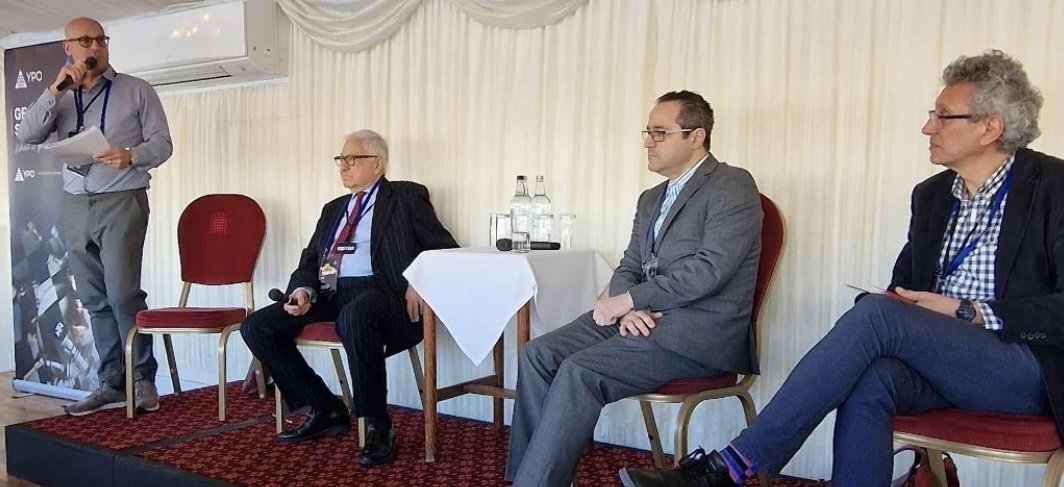
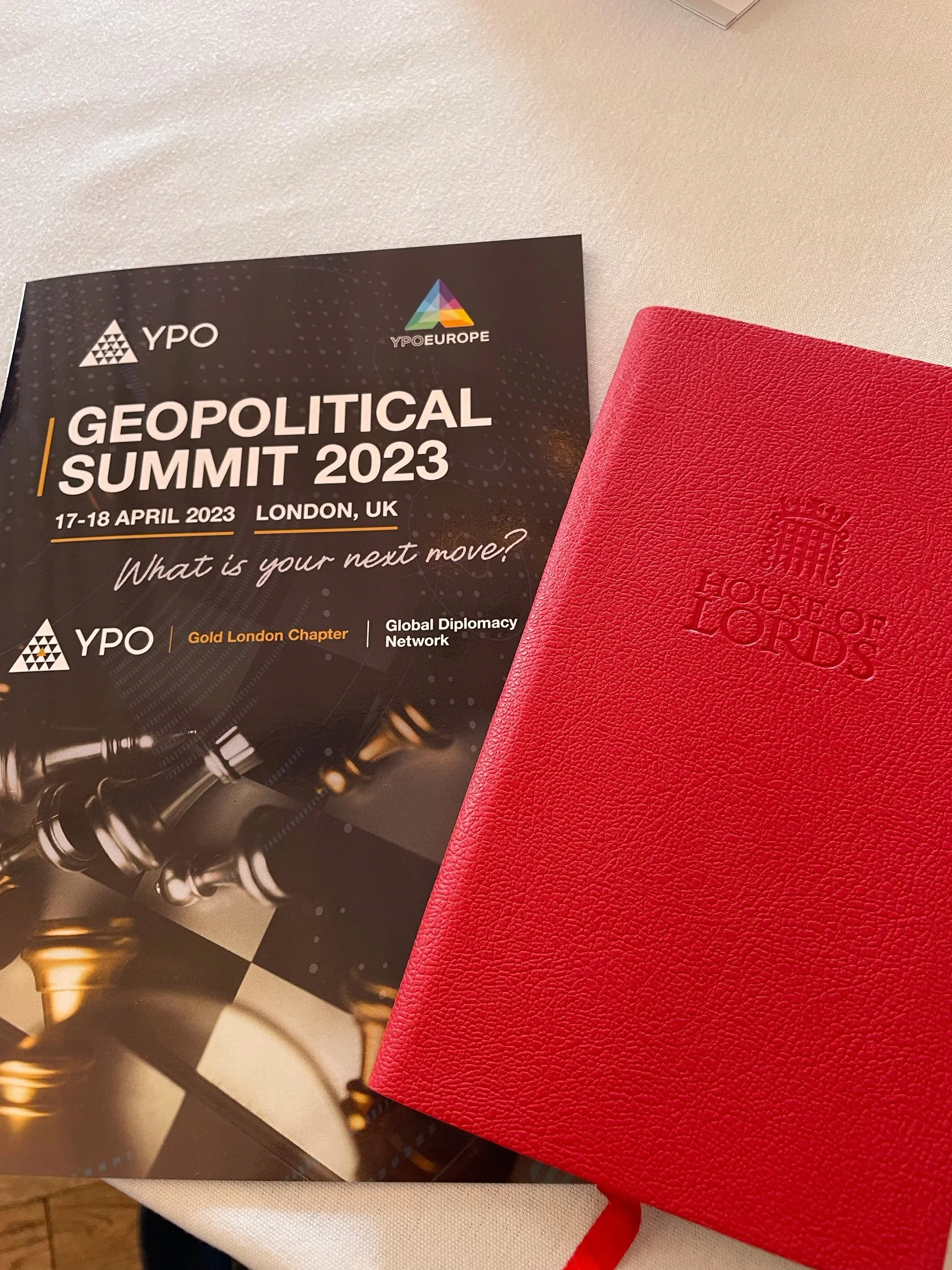
On April 17th Hagai participated on an expert panel on Middle-East Geopolitics at the Young Presidents Organisation (YPO) global Geopolitical Summit at the House of Lords in London.

YPO, founded in 1950, is the world’s largest leadership community of CEOs/chief executives — over 30,000 members globally coming together “to become better leaders and better people”.

The two day event included panels on key global and regional geopolitical dynamics, with other speakers including the Ukrainian Ambassador to the UK, former UK Defence Ministers, Generals and Admirals, current members of the House of Commons and House of Lords, and leading academics and other experts.

Hagai was thanked by the organisers for his “extraordinarily informed and worthwhile” contribution to the discussions.

Article - Israel's judicial reforms could initiate a collapse of the US-Israel special relationship.

Hagai today had an Opinion piece published in the UAE newspaper The National on how the judicial legislation in Israel threatens to undermine the entire basis of US and international recognition of Israel. It highlights that US recognition of the new State of Israel in the late 1940s was contingent on Israel proving it was a liberal democracy, and argue that today US support of Israel is much more fragile than people think and thus is under threat if Israel moves away from this liberal democratic basis.

Israel's judicial reforms could initiate a collapse of the US-Israel special relationship

Bradseco webinar - Geopolitics + the Outlook for Oil Markets

On October 19th 2022 Hagai gave a webinar briefing for global clients of Bradesco BBI, the Brazilian investment bank, entitled Geopolitics + the Outlook for Oil Markets.

Hagai addressed recent developments including the war in Ukraine and its economic effects, the OPEC+ production cut, its implications and what it tells us about US-Saudi and US-Russian relations, China-US dynamics, and impacts on energy transition.

Hagai was thanked by the organisers for “a simply excellent!” briefing.

al-Zawahiri killing article / Afghanistan -Taliban - Terrorism

Today Hagai had published a Comment & Opinion piece in the South China Morning Post - the historic English language newspaper of Hong Kong - on the killing of al-Qaeda leader Ayman al-Zawahiri and what him being found by the US in Kabul might tell us about the Taliban’s internal disputes in regards relations with al-Qaeda and other terror factions. Attention has falllen on the Haqqani, who it seems were al-Zawahiri’s hosts. Whether the Taliban limits itself to austere Islamist domestic policies or again involves itself in external jihadist activity going forward may depend on the winners and losers of the all-Zawahiri affair: Al-Qaeda leader Zawahiri is dead, but Afghanistan terror threat remains a global concern

This follows Hagai’s analysis, in the same newspaper back in September 2021, on the US withdrawal from Afghanistan and its consequences: US leaving Afghanistan clears a lucrative but risky path for China and others